Saturday, 26 September 2015

Experimental Postcards

Based off our primary research and objects we made experimental postcards using different techniques such as drawing, collage and mark making. Some of these techniques included continuous line, stitching, using objects as stamps, abstract images and using different medias. We will be editing these on Photoshop to make them look better and to help build up our print. I think its good that we had to make 25-30 because the more techniques you cover the better your ideas look you could have one you really like and one not so much but doing lots can help come you come up with really good ideas and develop ones further to make them even more interesting.

You straight away see my colour theme and see that I have done a lot of drawing and mark making I need to do some more collage and do some more stitching as the one I have stitched on worked out really well.

Some of my favorites 
This was based of a old tire in my back yard I made cardboard shapes of tires and cut a hole out the middle  I then used water colour to print them I found it didn't show up as much so I used black ink , I then stitched the tire details into the middles of the circles after that I used fine liner to outline and define the tires I drew these in an abstract way to make my image more interesting. I love how the ink isn't a block colour; the colour looks like it's been worn away. It really adds interest to the image I think were as having the block colour would look more graphic theses look more like the tire in my photograph because the tire is old and the colours are worn away in areas and it's rusty.
I first splattered paint onto yellow card to create a rust like texture I mixed different tones of browns. I then cut and stuck down strips of masking tape down the card in a vertical style to recreate the reflective lines which appear on the side of skips. I then used acrylic paints in a messy style layering colours and smudging them to make the skip look dirty and rusty. I think this worked out really well and is really effective due to the acrylic smudging and the texture of it.
This is one of my collage postcards. I used different papers, such as this yellow card I bought which appeared to have a burnt effect but it also reminded me of rust. I made a skip shape out of this based of my photograph and then I added different items which I saw in the skip using different papers. I made the carpet using a graph paper and others items out of coloured card. I stuck them all onto a piece of card. I feel this works well because it looks quite abstract the colours are dull and even though it's a flat image I do feel that it does stand out because it's not detailed, there are no bold lines and it's very different then most of my other postcards.

This is my ink drawing of the back of a phone drawn on to the burnt effect rust look paper. This drawing is really bold, it's graphic I love the mix of thin and thick lines some lines look degraded and almost pixel like which reminds me of technology.  This is really effective because of these details I also like how there's only two colours I feel the black looks really strong against the yellow background. 
I made this postcard by using one of my objects which was a piece of sponging of a broken headphone I painted with ink and dotted the sponge all over the page until the lines were slowly disappearing and then i'd re-paint it again with more ink. I have never used objects to mark make before but I really like the way it turned it because you can't always draw exactly what the object is but by using them you get the true effect of that object. 
This was simply drawn with pencil and is a figurative drawing of a broken USB stick. I think this works well even though it's basic it's strong because it's so basic and not detailed as much as some of my other postcards. The lines are quite clean and they're thin. The object is almost asymmetrical drawn and I really like the unusual shape of this drawing.

Friday, 25 September 2015

Further Primary Research


Once I found my focus I started taking more pictures related to my theme I looked at more skips,  objects inside of skips, more plugs, wires, broken objects thrown away and pipes. 


Thursday, 24 September 2015

Everyday Objects- Primary Photographs

I think my photographs relate to my theme because these are some of the objects I see everyday such as I walk pass this skip everyday on my way home and the rest are objects I use and my family use everyday. These are objects you use and see but never really think about.

I took a range of primary photographs and from my photographs, as a class, we performed a group critique to help think of a theme, colour scheme and a direction for everyone individually to go for. I am going to be looking at broken objects, objects that get thrown away based on my pictures which feature irons, plugs and a skip. I am going to take more pictures of different plug sockets, more skips, different plugs, wires and broken objects. I am also going to shoot zoomed in photos and take photographs in the night of my skips.

My colour palette based on my pictures feels like it would be dirty colours and darker ones such as metallics, greys,browns, black and dirty yellow.


Wednesday, 16 September 2015

Past Designers and Artists who use everyday objects as their media and inspiration


Most people will look past everyday objects but these artists see them in a different light and have a
more unique perspective and will use them as their muse for their artwork.

Swiss artist Jean Tinguely was mostly known for his meta-mechanics which are basically kinetic sculptures. He then moved to Paris in 1952 and then became apart of the Parisian avantgarde in the middle of the century. He also joined the new realism movement. I think he is really interesting, I think his sculptures are really fun an unique he uses objects I wouldn't imagine together my particular favourite is the  He was also painter,

The first piece of work Jean Tinguely did when he moved to Paris was “Moulin à prière“ made using a tubular steel frame, steel wire,cardboard and an electric motor. All these pieces move like cogs these were to 'rotate with the motion of relief'.

                              Miostar No. 2

                                     1974


One of his best know piece entitled 'Homage to New York' this item self
destructs,  1960 made from pram wheels, scrap iron an electric horn
and an electric motor.
Frigo Duchamp 1960
made from a fridge, siren, machine parts
and an electric motor.
Another one of his famous sculptures entitled
Schwimmwasserplastik, Fountaine, 1980 for
an exhibition that was all about sculpture
in the 20th century. 

Research references;
https://en.wikipedia.org/wiki/Jean_Tinguely
http://www.fribourgtourisme.ch/en/jean-tinguely.html
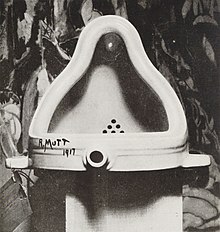
This piece is a urinal it was entitled 'Fountain'
people were shocked that this piece was in
a museum it was then censored by the board
Duchamp thought it was not right and him
and his other artists friends protested against
it to which the bored replied with
‘The Fountain may be a very useful object
in its place, but its place
 is not in an art exhibition
 and it is, by no definition, a work of art.’ 
http://www.tinguely.ch/en.html

Marcel Duchamp 01.jpg
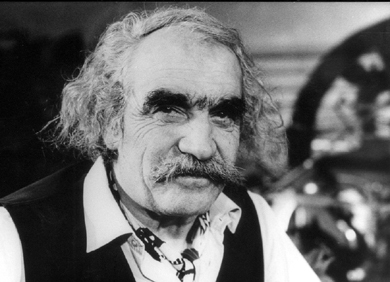
Marcel Duchamp
was a french artist
whom was a painter
and sculptor.


https://en.wikipedia.org/wiki/Marcel_Duchamp
http://www.tate.org.uk/art/artworks/duchamp-fountain-t07573/text-summary
The Large Glass
It is a motorized sculpture, the motor span the pieces of glass, when it spins it makes an optical illusion he made this with help from Man Ray, Man Ray went to photograph the experiment but when they turned it on for the second time one of the belts broke, it broke a piece of glass with it which nearly hit man ray before smashing into pieces on the floor. He built another one based on thia piece but asked for it not to be displayed as art.

Daniel Spoerri 
Daniel was best know for object art such as taking pictures of finished meals, including everything they used such as plates, cutlery, drunken drinks before they all got cleaned up; object art was also known as snare-pictures. he takes the picture as if you're looking down at the table.
https://en.wikipedia.org/wiki/Daniel_Spoerri
http://www.invaluable.com/artist/spoerri-daniel-0ili90twnd
http://www.wikiart.org/en/daniel-spoerri/assemblage-mit-dem-kopf-eines-pferdes-1990


Contempory Designers and Artists who use everyday objects as their inspiration

Giuseppe Colarusso
http://www.dailymail.co.uk/news/article-2347976/Artist-creates-wacky-images-turning-everyday-objects-impossible-use-items.html
Is an Italian photographer who mixes different objects with unexpected objects to produce original, fun and creative objects which are basically impossible to use properly. 
Juice on tap: Squeezing an orange just got a whole lot sillier thanks to this dotty device

Batty bat: A ping pong paddle with a gaping hole in itBeer we go: You'll be seeing double before your drink with this handy device
Goofy glasses: Now even the mythical cyclops can sport a trendy pair of shadesSomething missing: A perfectly useful washbasin, save for one small detail


I like how he uses objects that we take for granted and don't think about or appreciate. 

Tim Noble and Sue Webster worked together they started finding and keeping rubbish all over the streets of London and created an artwork called "Dirty White Trash (with Gulls)"

http://mic.com/articles/78977/10-everyday-objects-beautifully-transformed-into-works-of-art

Erika Iris Simmons creates her artwork using the black film from cassette tapes she cuts and positions the tape to look like famous people such as The Beatles and Steven Tyler.

http://mic.com/articles/78977/10-everyday-objects-beautifully-transformed-into-works-of-art


Nick Gentry-
Some the materials Gentry uses are; usb cables, film negatives and floppy disks to create his artwork. He create portraits out of these objects.
http://mic.com/articles/78977/10-everyday-objects-beautifully-transformed-into-works-of-art
http://www.nickgentry.com/biography/